Fast, Reliable Attic Insulation Across Portola Hills
If your Portola Hills home runs hot upstairs in summer and the AC never seems to catch up, the attic is almost always the culprit. Most homes in the 92610 zip code were built in the 1980s and 1990s with R-19 batts that have since settled, compressed, or been blown around by decades of Santa Ana winds. We replace that underperforming insulation with properly air-sealed, code-exceeding systems matched to foothill heat and wildfire conditions. Call (855) 490-8655 and we’ll be out within 24 to 48 hours to assess what your attic actually needs.
Why Emerald Insulation Is Portola Hills’s Preferred Attic Insulation Company
Portola Hills sits in a strange spot: far enough inland to bake at 100°F on summer afternoons, close enough to the canyons to get hammered by Santa Ana winds, and always under the shadow of wildfire season. The same insulation job that works in flat Irvine doesn’t hold up here. We know that because we work in this community regularly, from the tracts off Glenn Ranch Road to the hillside streets backing up to Cleveland National Forest. It means we spec for heat gain and ember intrusion, not just one or the other. Noel Cartagena, who leads our crew, has spent years dialing in the right material combinations for this specific microclimate. Our Portola Hills customers keep calling us back for the same reason: we match the insulation to the job, not to whatever product we happen to stock that month.
Attic Cleaning Services in Portola Hills
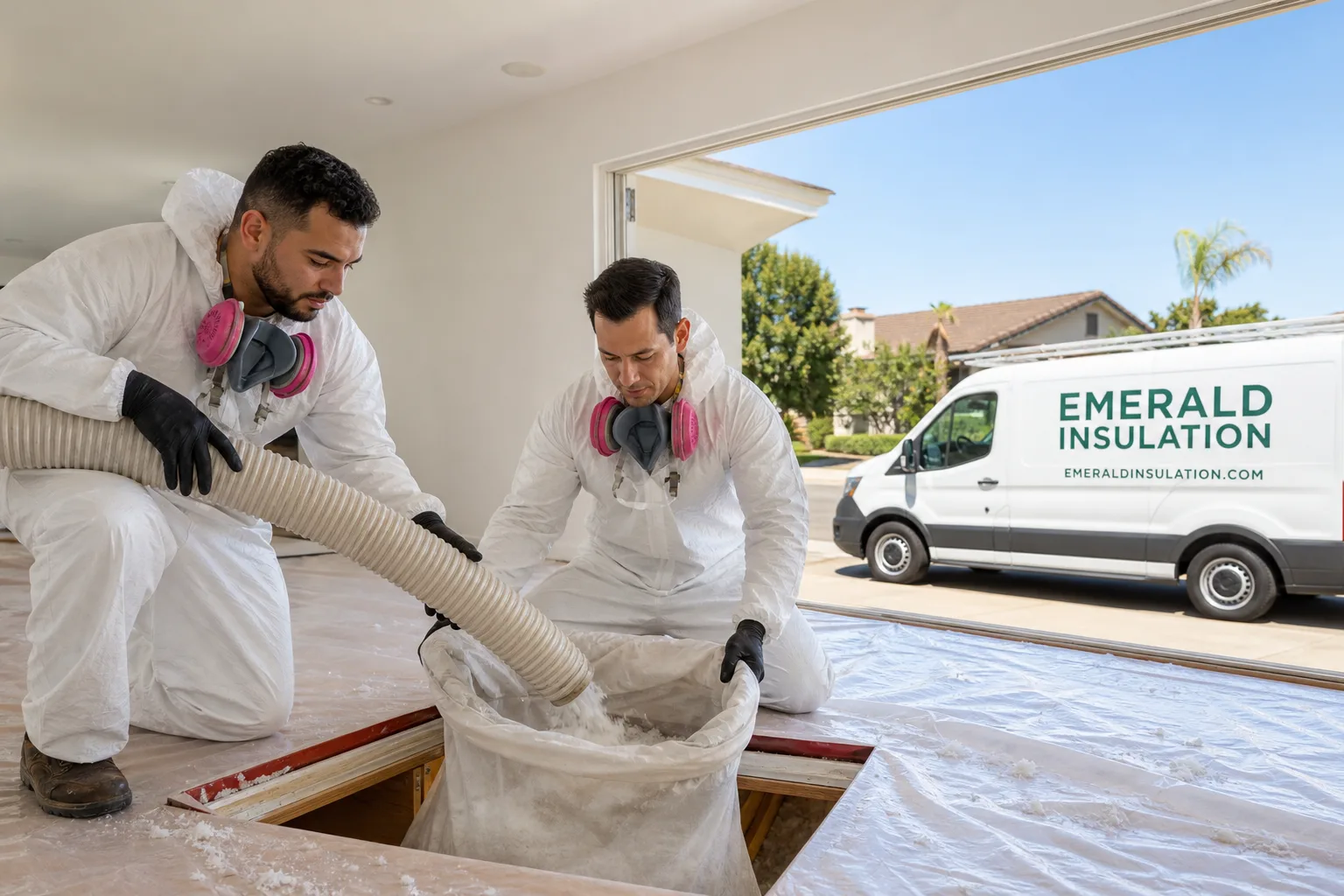
Attic Cleaning Services in Portola Hills address something most homeowners here discover the hard way: decades of wind-driven dust, rodent activity, and old insulation breakdown. Our crews remove the existing insulation, vacuum out debris, sanitize the attic floor, and prep the space for new material. In Portola Hills, a full attic cleaning runs $1,200 to $2,800, depending on attic size and how much contaminated material needs to come out. You’ll know it’s time when you smell something off in the upstairs hallway, see rodent droppings near the access hatch, or find dust blowing through ceiling registers.
Why Cleaning Matters Before Insulating
Blowing new insulation over old, contaminated material locks in the problem. Dust, rodent waste, and trapped moisture sit under the fresh layer and keep degrading air quality. In a Portola Hills home with a tight, low-pitch tile attic, that space gets brutally hot in August, which bakes those contaminants and pushes odor through every gap in the ceiling.
When We Recommend Full Removal
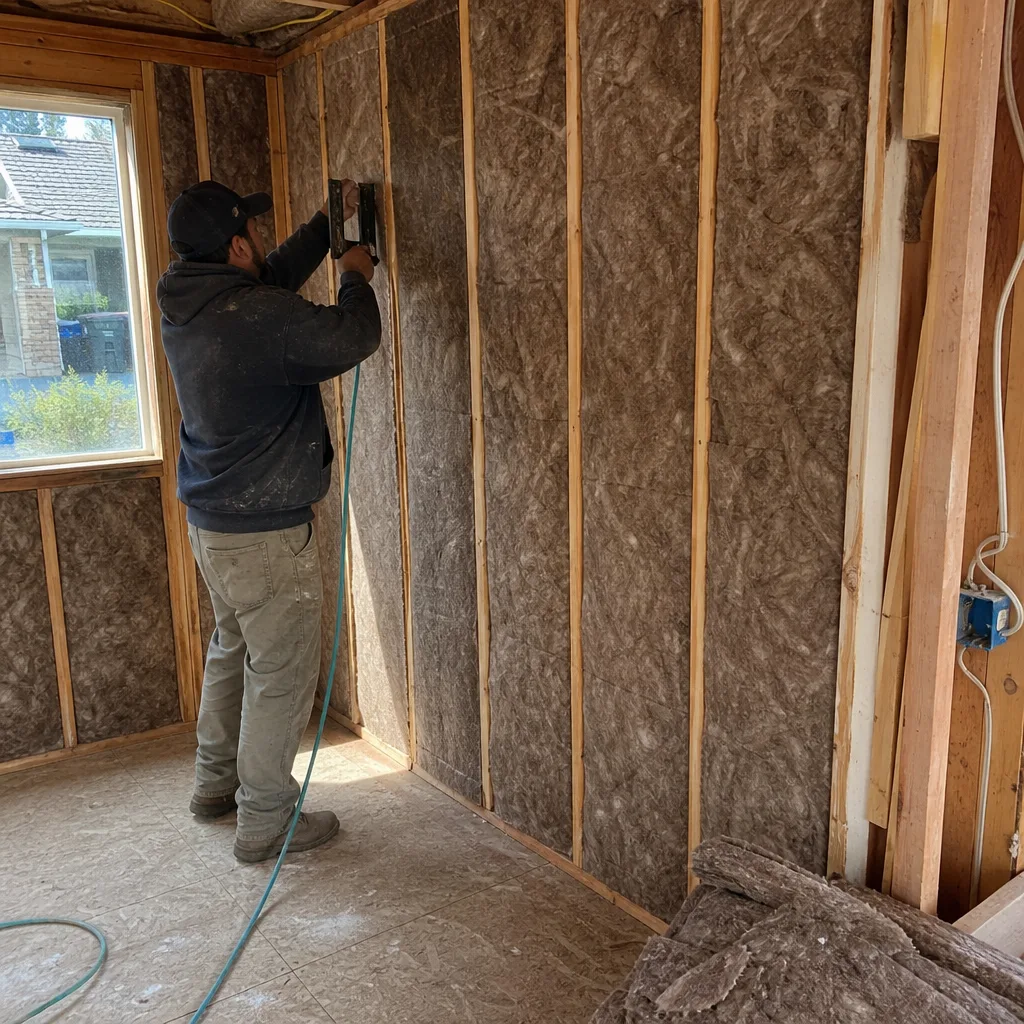
If the existing batt insulation is crushed, water-stained, or has visible rodent traffic, we recommend pulling it all rather than topping up. That’s the only way to inspect the top plates for air leaks and confirm the venting is still functioning. In wildfire-prone Portola Hills, it also lets us check whether your vents meet current ember-resistance standards before we put anything back.
What happens when you call
- 1
A real person answersNo phone trees — you reach a local pro.
- 2
You get an upfront price rangeHonest numbers before anyone is dispatched.
- 3
A background-checked tech heads outLicensed & insured, dispatched right away.
- 4
You approve before work beginsNothing starts until you say go.
Attic Mold Removal in Portola Hills
Attic Mold Removal in Portola Hills is a common request in the 1980s and 1990s hillside tracts where morning marine layer moisture gets trapped in poorly ventilated attics. We contain the affected area, remove mold-contaminated insulation, treat the framing, and re-insulate once the attic is dry. Mold remediation removal in this area typically runs $1,800 to $4,500 depending on the square footage involved and whether roof sheathing needs treatment. If you see dark staining on the underside of the roof deck or smell mildew in upstairs rooms, don’t wait; mold spreads fast in hot, enclosed attic spaces.
What Causes Mold in Portola Hills Attics
The marine layer pushes moisture in most mornings, and when the attic can’t vent it out, condensation collects on cool surfaces. Add in bathroom exhaust fans that terminate inside the attic instead of outside, a very common issue in Portola Hills homes and you’ve got a mold incubator. Older plastic foundation vents often get painted over or clogged with wind-blown debris, which cuts airflow to nearly zero.
Removal and Prevention Together
Treating mold without fixing the underlying moisture problem guarantees it comes back. Our crew identifies the venting or exhaust fan issue that caused the mold, corrects it, and then installs insulation that won’t hold moisture. We typically recommend Rockwool mineral wool for attics with recurring moisture issues because it’s naturally resistant to mold and won’t lose its R-value if it does get damp.
Trusted Brands We Service in Portola Hills
Emerald Insulation carries multiple competing brands so the recommendation comes from your home’s actual conditions, not vendor relationships. We stock CertainTeed fiberglass because it holds its loft well in low-pitch attics where space is tight, and we carry Rockwool mineral wool specifically for Portola Hills customers who want fire resistance and mold resilience alongside thermal performance. For the 1980s and 1990s homes where batts are the practical choice, Johns Manville and Knauf are both in our inventory. If you’re in Portola Hills and not sure which material fits your attic, we’ll tell you the honest difference between them without pushing a single line.
Common Attic Insulation Problems We See in Portola Hills Homes
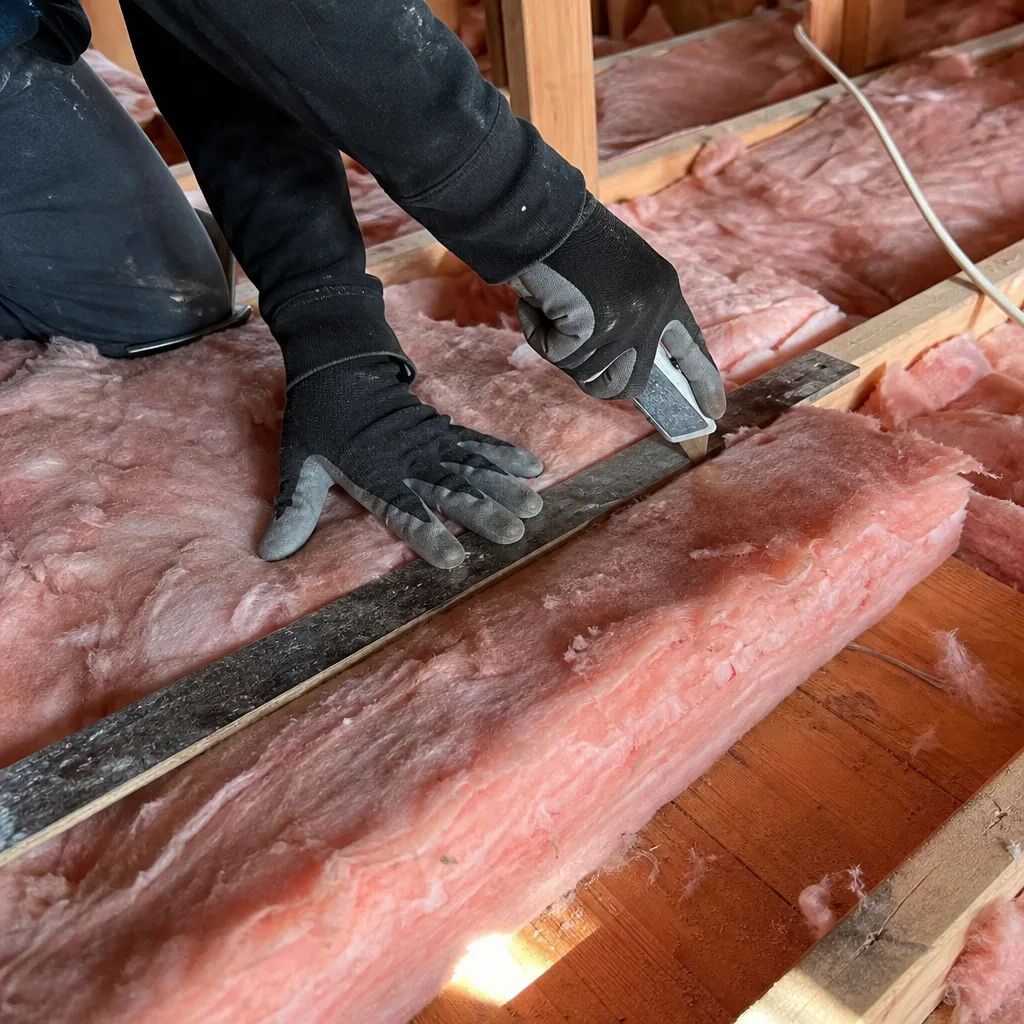
- Crushed and settled R-19 batts. Original fiberglass batts from the 1980s and 1990s compress over time, especially in low-pitch tile attics where space is limited. A batt that started at R-19 can be performing at R-11 or worse after three decades of Santa Ana wind vibration and dryer-vent heat cycling. We routinely pull batts from Portola Hills attics that look like carpet padding.
- Builder-grade vents that fail ember intrusion. The standard plastic or stamped-metal attic vents installed on original Portola Hills construction have 1/4-inch mesh screens. During a Santa Ana wildfire event, embers blow straight through those openings and land on dry insulation or wooden framing. Chapter 7A ember-resistant vents are a different animal, and most Portola Hills homes don’t have them yet.
- Unsealed top plates and garage-side knee walls. Steep graded lots mean many Portola Hills homes have garages built into the hillside, with walls that share attic space but aren’t properly insulated or air-sealed. Hot garage air, car exhaust fumes, and canyon dust bypass whatever insulation you have and leak directly into the house through these gaps.
- Ventilation bathtubs and blocked soffits. Low-pitch tile roofs leave very little attic height, and bathroom exhaust fans are frequently terminated in the attic rather than through the roof. That pumps warm, moist air into a space that can’t vent it, creating condensation, mold, and rot around the sheathing.
Pricing for Attic Insulation in Portola Hills, CA
Attic insulation prices in Portola Hills are straightforward once you know the square footage and current attic condition. A blown-in fiberglass top-up for a 1,500-square-foot attic typically runs $1,400 to $2,300. Full removal and replacement with blown-in insulation at R-38 runs $2,800 to $5,500 depending on attic accessibility and how much prep work is needed. Adding air sealing around top plates and penetrations adds $400 to $900. If you need Chapter 7A ember-resistant vent replacement, budget $60 to $180 per vent installed, depending on the model and roof pitch. We give free estimates, and the quote you get is the number you’ll pay. Call (855) 490-8655 to schedule a walkthrough.
We Also Serve Cities Near Portola Hills
Our crews work throughout southern Orange County. If you’re in Portola Hills or the surrounding communities of Foothill Ranch, Lake Forest, Mission Viejo, or Trabuco Canyon, we can usually schedule within a few days. Same crew, same eight-brand material selection, same Chapter 7A expertise. Call (855) 490-8655 with your address and we’ll confirm coverage.
Serving Portola Hills, CA — Our Local Coverage Area
We’re based in the Portola Hills area and know this community well. Use the map below to see our service coverage — if you’re nearby, we can almost certainly help.
FAQs About Attic Insulation in Portola Hills
Yes. Portola Hills is in a wildfire hazard zone under California Chapter 7A building code, which requires ember-resistant attic vents on new construction and significant retrofits. If we’re doing a full attic insulation replacement in Portola Hills and your existing vents have the standard 1/4-inch mesh, we’ll recommend swapping them for ember-resistant models before we install new insulation. We recently did exactly that on a Canyon View Lane home, replacing the original plastic foundation vents with Chapter 7A-rated units before putting R-38 back in. Call (855) 490-8655 to schedule an inspection and we’ll tell you what your vents currently meet.
For a Portola Hills attic, we target R-38 to R-49. The Department of Energy recommends R-30 to R-60 for southern California attics, and R-38 is the practical sweet spot for most Portola Hills attics where low-pitch tile roofs limit the available depth. If your home still has original R-19 batts, you’re running at less than half the insulation you need. More importantly, the batts themselves may be performing far worse than R-19 after decades of compression. The fix is usually a full removal and blown-in replacement at R-38 or higher. Air sealing matters just as much as R-value on the hot canyon-facing sides of the house.
Yes, we handle full mold removal and attic remediation throughout Portola Hills. The process starts with containment, removal of contaminated insulation, treatment of affected framing, and then replacement with clean insulation once the attic is dry. Most Portola Hills mold problems trace back to poorly terminated bathroom exhaust fans or blocked soffit vents that trap morning marine layer moisture. We’ll identify and fix that source so the mold doesn’t return. The cost runs $1,800 to $4,500 depending on the affected area. Call (855) 490-8655 and we’ll walk you through what we’re seeing.
For a Portola Hills home with a low-pitch tile roof and limited attic clearance, blown-in fiberglass at R-38 is usually the best fit. It fills irregular cavities better than batts and doesn’t require the depth that cellulose does for the same R-value. If moisture has been an issue in the attic, we recommend Rockwool mineral wool, which resists mold and won’t slump or degrade if condensation occurs. For the garage-side knee walls on steep hillside lots, batts from CertainTeed or Johns Manville often make more sense because they install cleanly in vertical cavities.
Air sealing closes the gaps where smoke, embers, and garage fumes bypass your insulation. In a Portola Hills home, the most critical leaks are around top plates, recessed light fixtures, attic access hatches, and the wall between a hillside garage and the conditioned space above. During a Santa Ana event, smoke finds every one of those openings. We seal them with foam and caulk before we insulate, which does double duty: it keeps smoke out during wildfire season and stops hot canyon air from driving up your cooling bills the rest of the summer. The air-sealing step typically adds $400 to $900 to a full attic insulation job in Portola Hills.
Get Your Portola Hills Attic Insulation Assessed
Every Portola Hills attic is different. Some need a simple top-up. Others need full removal, Chapter 7A vent upgrades, air sealing, and new blown-in insulation. The only way to know is to get up there and look. Call Noel Cartagena and the Attic Insulation crew at Emerald Insulation at (855) 490-8655 for a free estimate. We’ll tell you exactly what’s in your attic now, what it’s actually performing at, and what makes sense to do about it. No pressure, no upselling, just honest answers from people who work in Portola Hills regularly.
Written by Noel Cartagena, Owner at Emerald Insulation, serving Portola Hills and southern Orange County. Our crews work from Irvine and know the wildfire-zone, heat-gain conditions of the 92610 foothill community firsthand.